Starship Flight 14 goes orbital and delivers real payload to space for the first time.
Has the Starship test flight program now entered a new phase? The answer to this question must be “Yes”. Starship has finally gone orbital. And Flight 14 delivered a real payload to space for the first time.
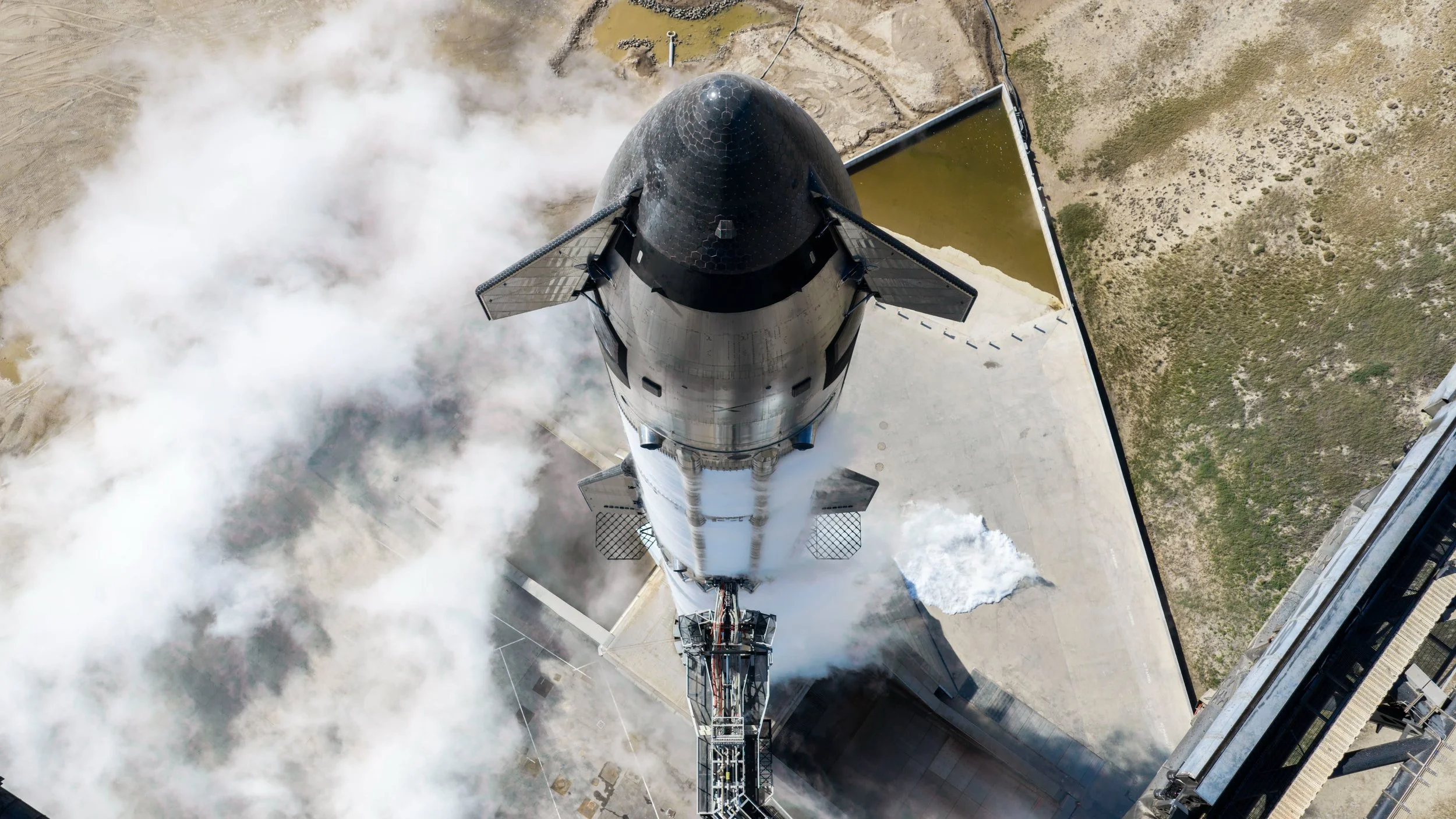
Looking down at Starship during a wet-dress rehearsal for Flight 14. Credit: SpaceX
As reported in our previous article, two of the heat shield tiles from Flight 13 were reused on this flight.
Flight 14’s objectives favoured an early morning lift-off from Starbase, Texas (late lunchtime here in the UK). The launch went smoothly, although one Raptor engine shut down on the Super Heavy booster during ascent. Stage separation was likewise smoothly executed.
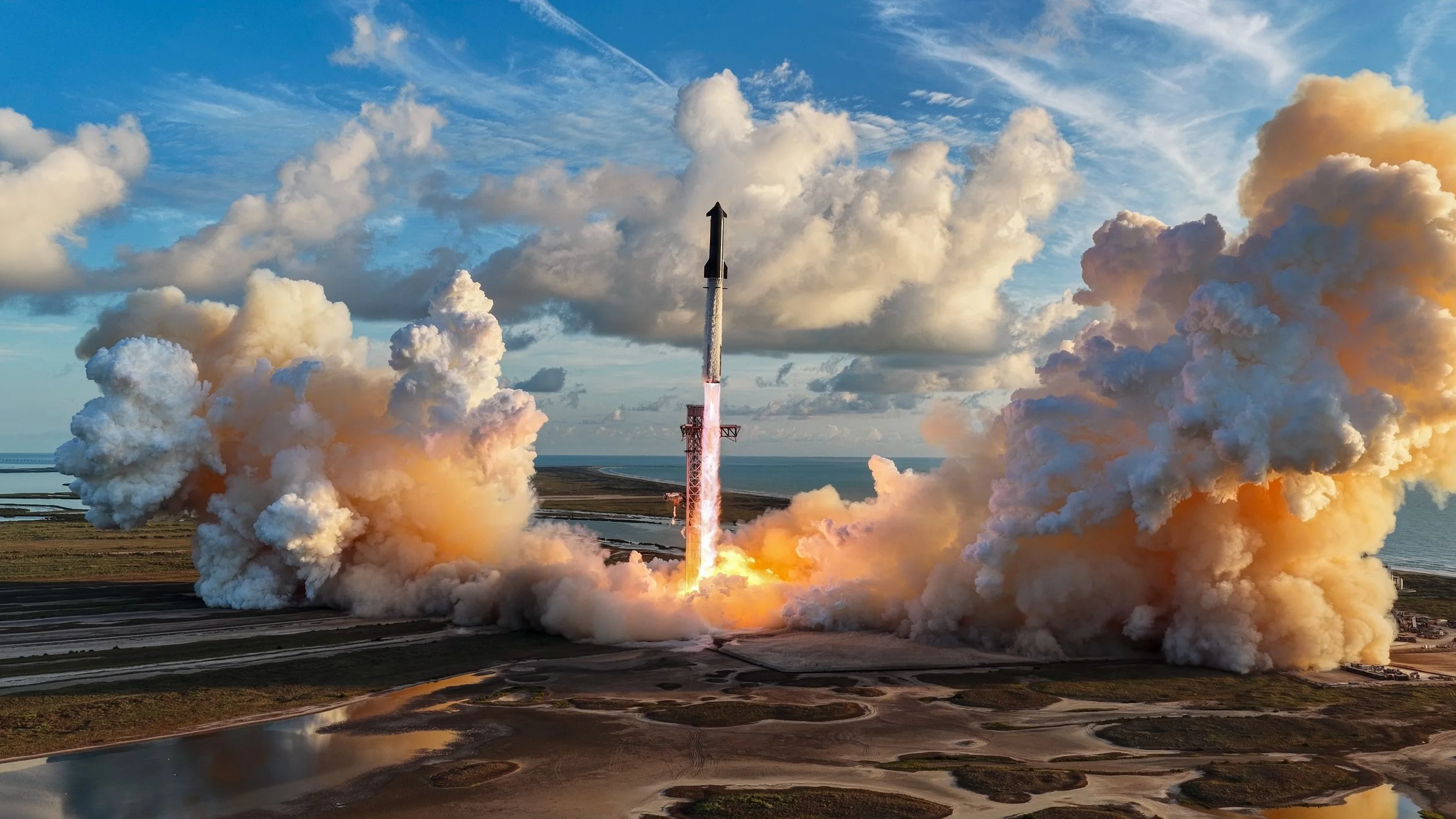
Launches are always powerful. Credit: SpaceX
The Super Heavy booster successfully completed its boostback burn, albeit with only 31 of the planned 33 Raptors. It then achieved a good landing burn and soft splashdown in the Gulf of America, even with two of the inner 13 Raptors unable to re-ignite.
The upper stage Starship was going well, until one of the three vacuum Raptor engines shut down early. Nevertheless, the initial suborbital trajectory was achieved. This single vacuum engine shutdown issue initially cast doubt as to whether the aim of going to Low Earth Orbit would be scrapped - but, after the flight control team analysed and discussed everything, the decision was made to “Go for orbit”. A single sea-level Raptor was re-ignited for about 19 seconds to perform an orbit insertion burn and Starship then entered into orbit around Earth for the first time.
We were then treated to breathtaking views of planet Earth in daylight, followed by the deployment of 26 Version 3 Starlink satellites (again, mostly with daylight live pictures, until the Ship passed into darkness). Starlink engineers quickly made contact with all 26 satellites.
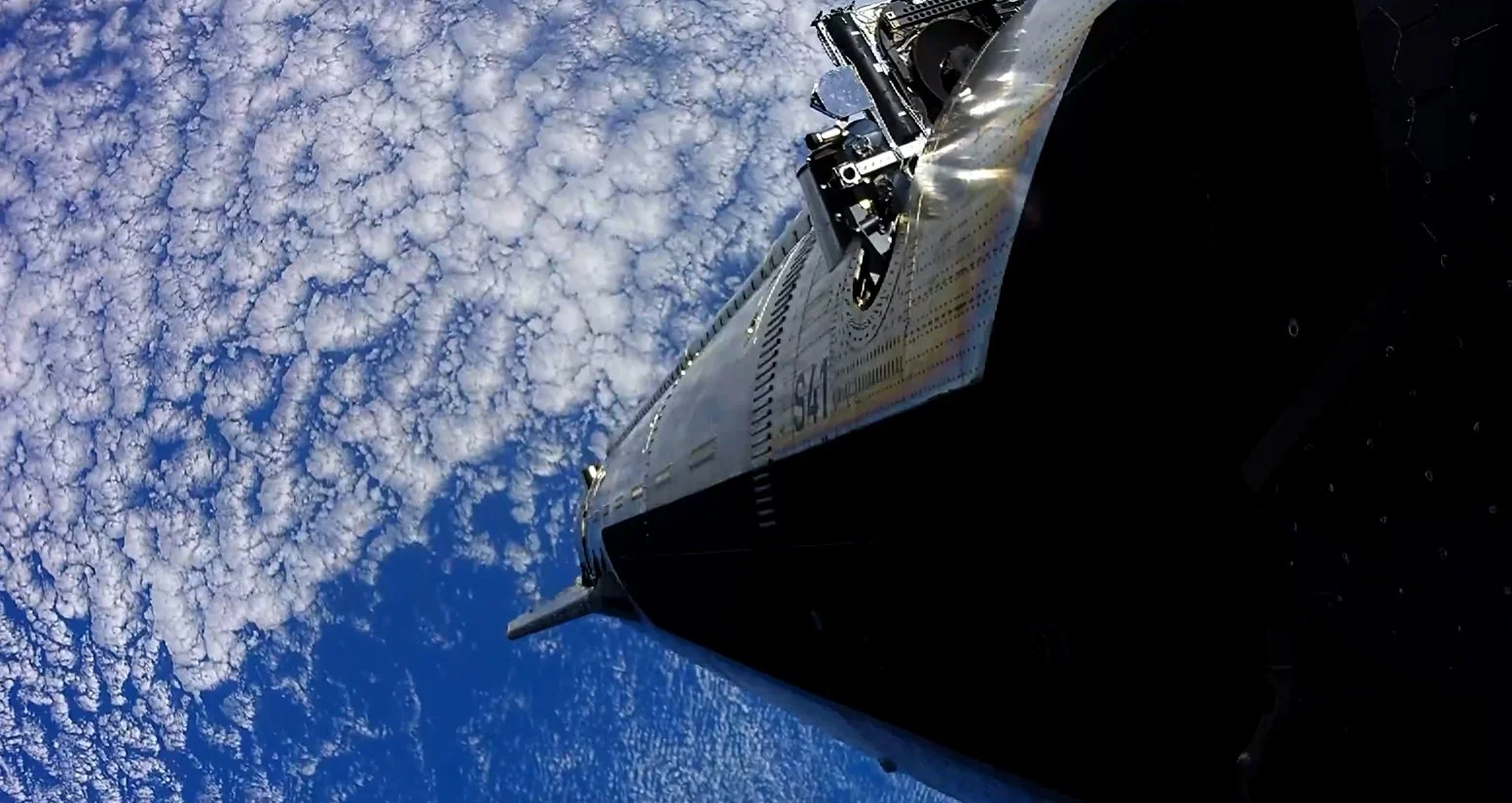
The first of 26 V3 Starlink satellites deployed into space. Credit: SpaceX
It would have taken ten Falcon 9 launches to deploy the same payload. As if this isn’t impressive enough, future Starship flights will be able to accommodate 60 V3 Starlink satellites - the equivalent of 20 Falcon 9 payloads. In the near future, this significantly improved capacity will make a massive difference to the amount of tonnage that can be delivered to space. We have known all along that Starship was designed to be a game changer in this crucial way. It’s genuinely a BIG step forward to anything that we’ve seen before.
At T+01.27.00, we were informed that the decision had been taken to limit the time spent on orbit out of an abundance of caution. The deorbit burn therefore took place at 2 hours 12 minutes into the flight. Re-entry into the Earth’s atmosphere happened at the 2 hours 47 minutes mark, the flaps and underside of Starship gradually slowing the vehicle down as it made its way towards the planet’s surface.
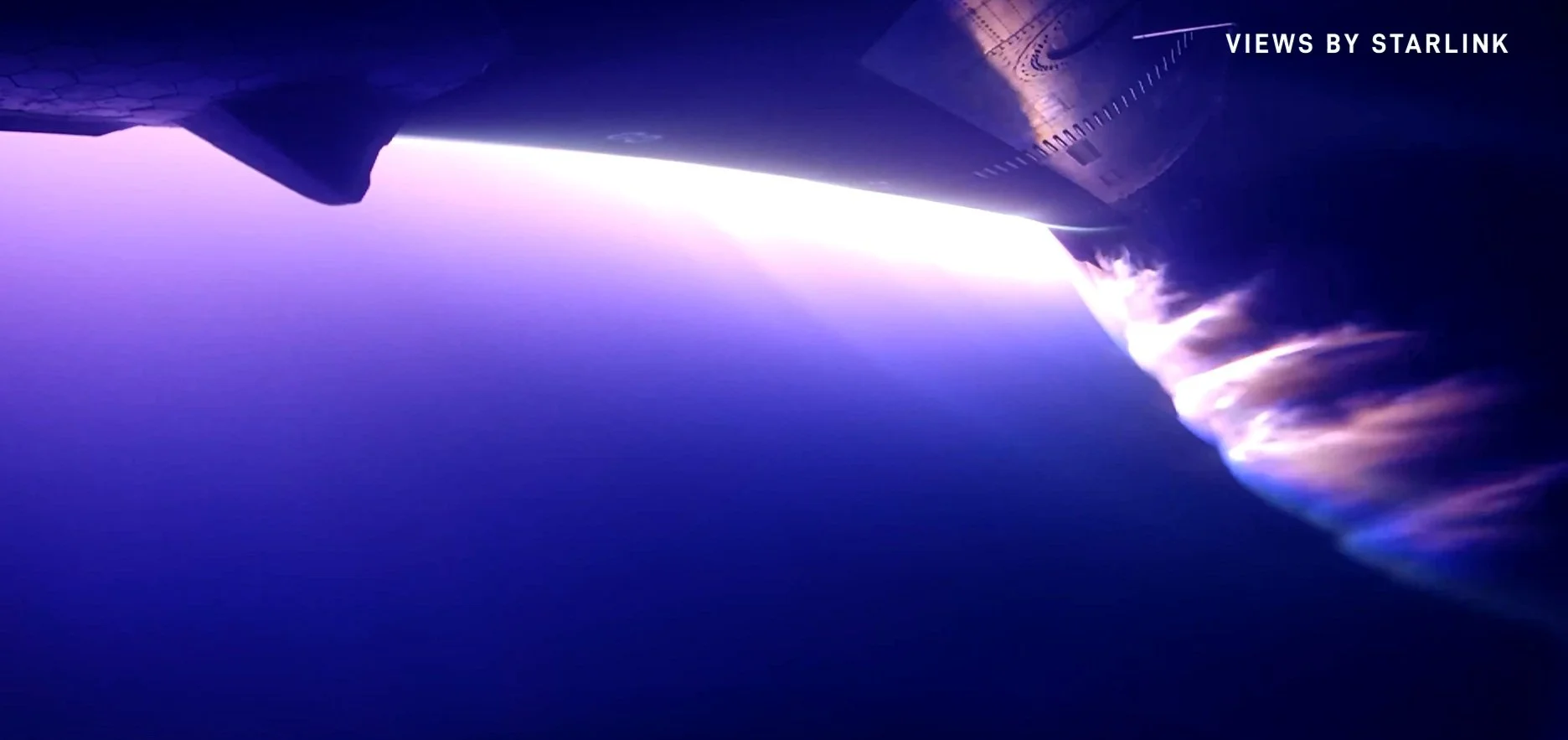
Re-entry. Credit: SpaceX
The landing burn acted as a final braking of Starship as it splashed down, on target, to a pre-cleared zone in the Pacific Ocean 3 hours, 8 minutes, and 25 seconds after launch.
Finally, as SpaceX’s livestream was about to finish, we were treated to video of Starship taken from one of the Starlink satellites after it had just been deployed. Magic! What a tremendously successful flight!
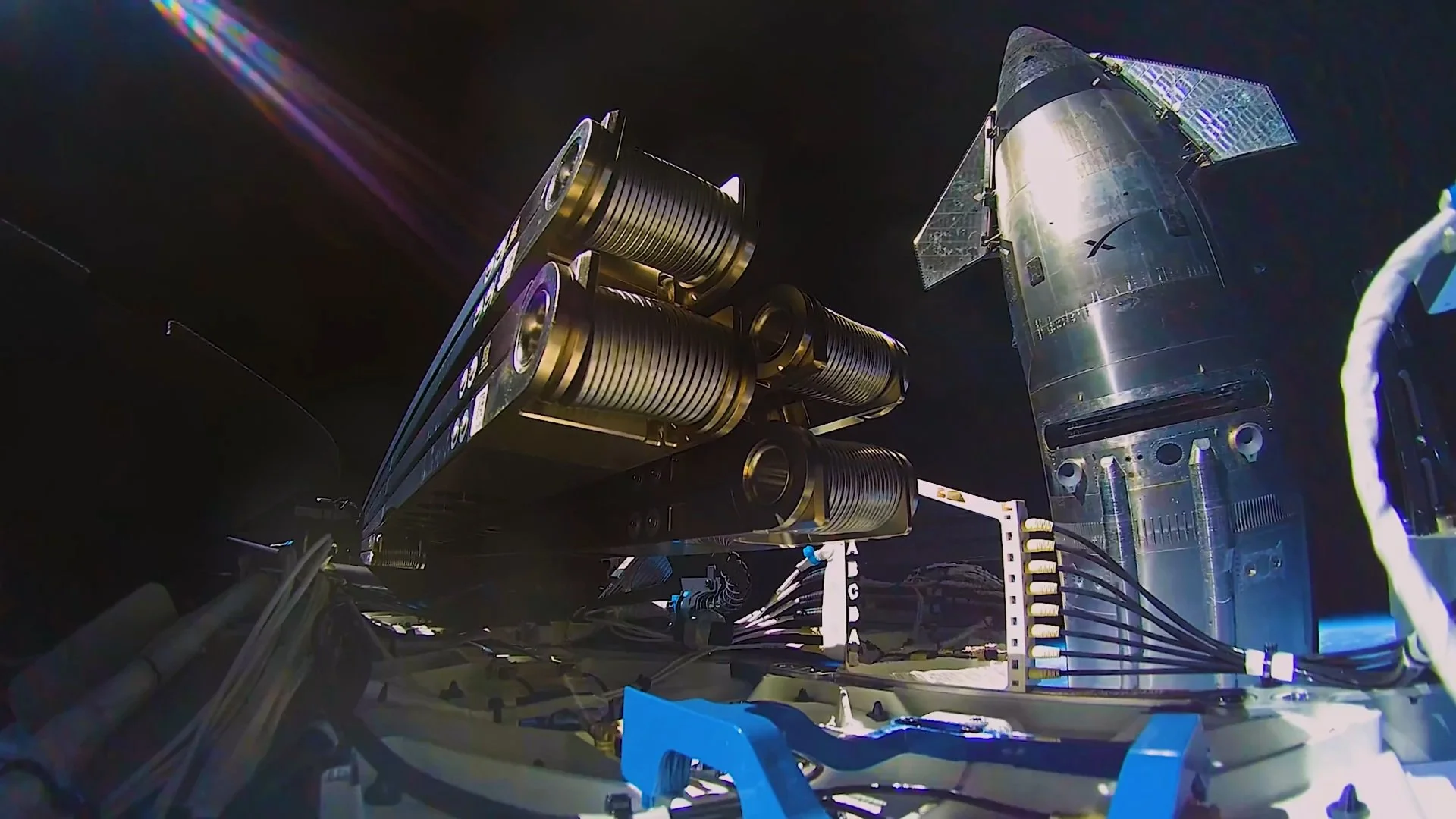
An extreme wide-angle view of Starship taken from a just-deployed Starlink satellite. Credit: SpaceX.
Written by Iain Scott, 28th September 2026