Starship’s heat shield tiles are crucial for a fully and rapid reusable rocket. But will they work?
SpaceX’s Falcon 9 rockets have demonstrated the practicality of reusability, but only for the first stage booster. B1067 currently holds the record of 37 launches and landings. The aim of Starship is full and rapid reusability.
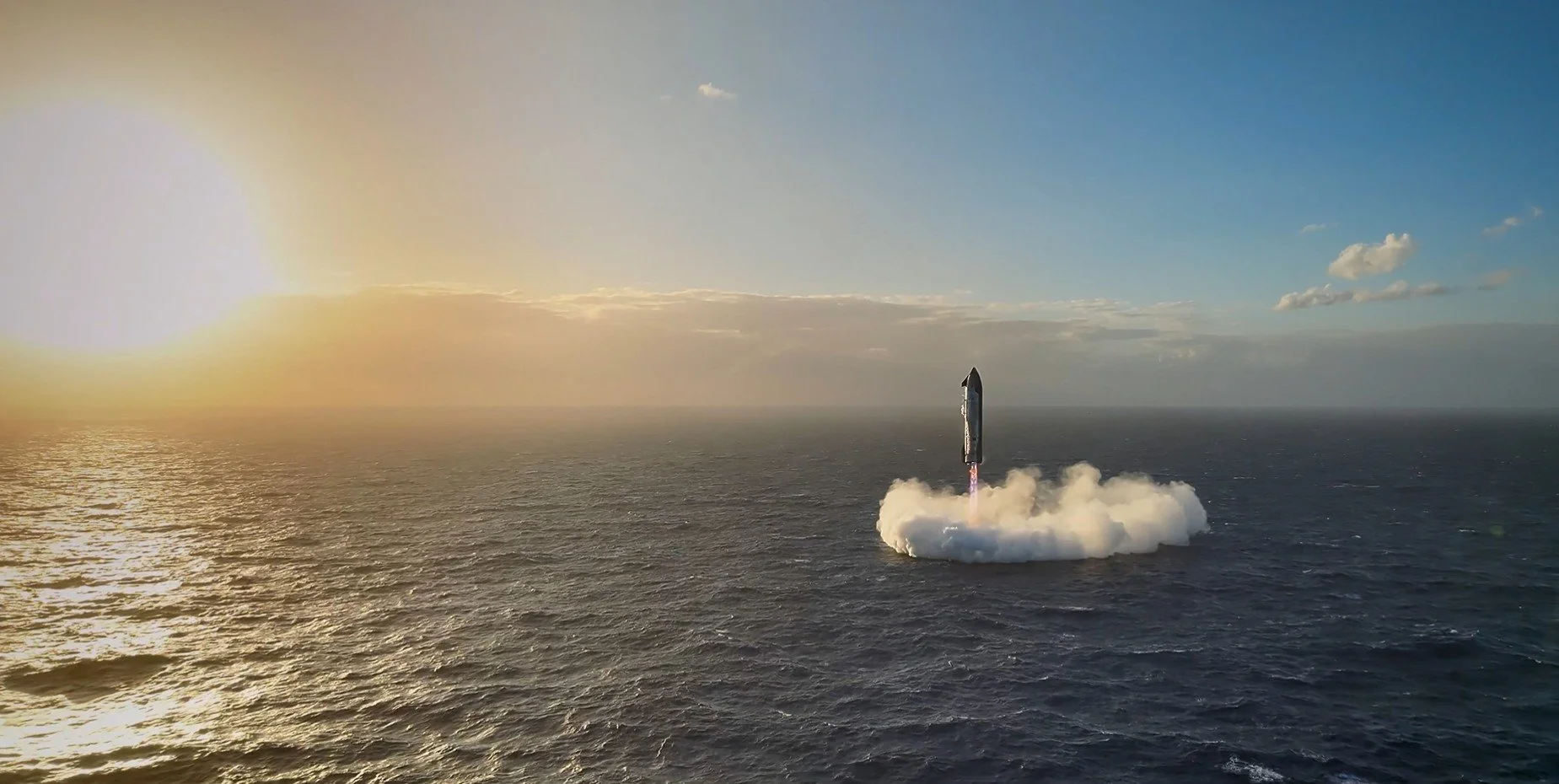
Starship Flight 13 soft splashdown. Credit: SpaceX
To be clear, the Space Shuttle (1981-2011) was never genuinely reusable. It required extensive refurbishment involving months of tear-downs, system checks, and replacement of components - at considerable expense. This included the heat shield tiles. The Shuttle had over 24,000 unique custom-shaped tiles. Starship has approximately 18,000 standard hexagonal tiles.
A rocket’s first stage booster, whether it be Falcon 9’s or Starship’s Super Heavy - typically reaches a maximum altitude of 50 to 93 miles (80 to 150 km). These boosters don’t have to face the intense heat of re-entry from space through the upper atmosphere. The upper stage Starship in Flight 13, by comparison, reached a suborbital altitude of 123 miles (198km). And Flight 14 will target a true orbit of 170 miles (275km) above Earth. These upper stage vehicles must survive immense structural and thermal stresses as they return from their missions.
Starship relies on a belly-first hypersonic re-entry strategy, using atmospheric friction as a massive breaking system. This phenomenal friction compresses the air in front of the vehicle, creating a superheated envelope of glowing plasma that reaches temperatures of 1,425°C (2,600°F). This is when we see the amazing colours during re-entry. Historically, this superheated plasma field surrounding a re-entering spacecraft blocked radio transmissions. The Starlink satellite network, however, combined with Starship’s massive size, beams live high-definition video back to Earth in real time - a first.
Whether Starship’s heat shield tiles will work well enough to enable full and rapid reusability is one of the most fiercely debated topics in aerospace engineering. Elon Musk is confident, but sceptics understandably argue a heat shield that survives re-entry should not be confused with rapid reusability. They point to the material limitations of the ceramic tiles which can be cracked, chipped, or structurally compromised by the thermal stress and landing dynamics. Will tile degradation force technicians to replace hundreds of fragile ceramic tiles after every single flight? Will SpaceX eventually be forced to revisit alternative ideas to withstand the intense forces of re-entry?
The data obtained from Starship’s Flight 13 on 24th July didn’t end at splashdown. For the first time, Starship came down as if being caught by a tower. When it then tipped over onto the water, amazingly, it didn’t sink. A SpaceX drone quickly swooped overhead to further examine the heat shield in as much detail as possible.
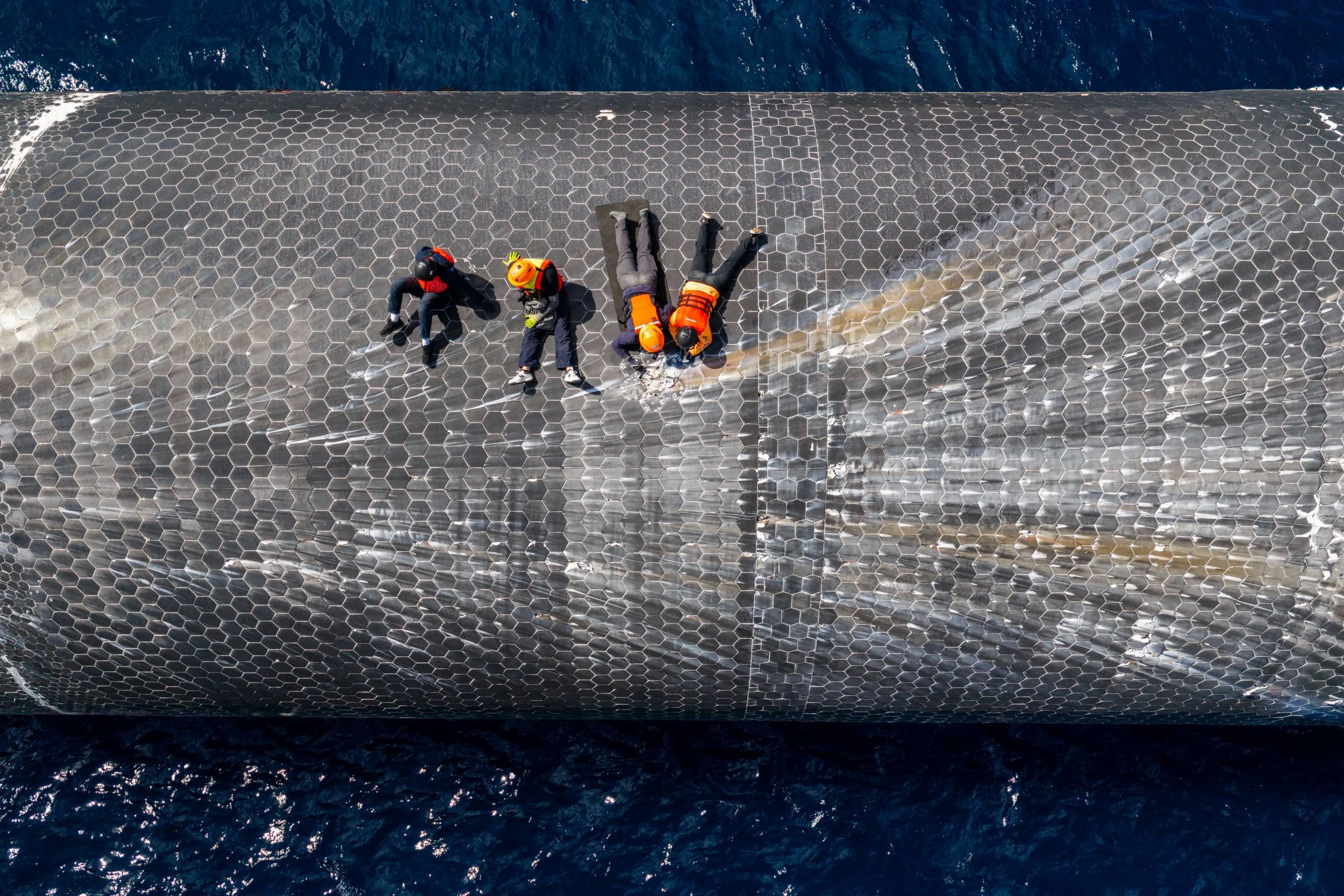
Examining Starship’s heat shield tiles. Credit: SpaceX
SpaceX subsequently decided to tow and recover the 52m upper stage Ship across the Indian Ocean. Bad weather and high seas made it a nightmare, but it eventually arrived at Christmas Island. A team of SpaceX specialist engineers travelled from the US and were able to examine it in detail, gathering heat shield tile samples, despite weeks of sea water causing damage. On 26th August, the semi-submersible heavy-lift transport vessel Forte loaded Ship 40 onto its deck. It’s currently expected to arrive at Brownsville, Texas, on 8th October or thereabouts.
As this article is being written, we’re likely just over a week away from the launch of Flight 14 (NET 28th September). We already know that there will be no attempted catch of the upper stage Ship, contrary to what Elon Musk said after the success of Flight 13. However, we also know that two of the heat shield tiles will be reused for the first time to assess how they perform.
I’m not an expert, so the following is merely an educated guess (at best). I think that SpaceX will make their heat shield tiles work well enough for quick reusability, if not rapid reusability. They’ll likely have to check the tiles in between flights, replacing a limited number. This will involve transporting the upper stage Starships back to a building suitable for inspection/repairs. Nevertheless, any inconvenience caused by this modest delay will be commercially viable.
Long term, all technical aspects of space travel will be transformed because we’re still at the very beginning of the journey.
Written by Iain Scott, 17th September 2026