SpaceX have clearly taken notice of Stevie Wonder’s famous lyrics: “Superstition ain’t the way!” Friday the 13th? No problem. Let’s go for launch!
On the afternoon - local time at Starbase, Texas - of Friday 13th November 2026, Starship lifted off to begin its 15th flight. The aim was a first-ever double catch attempt.
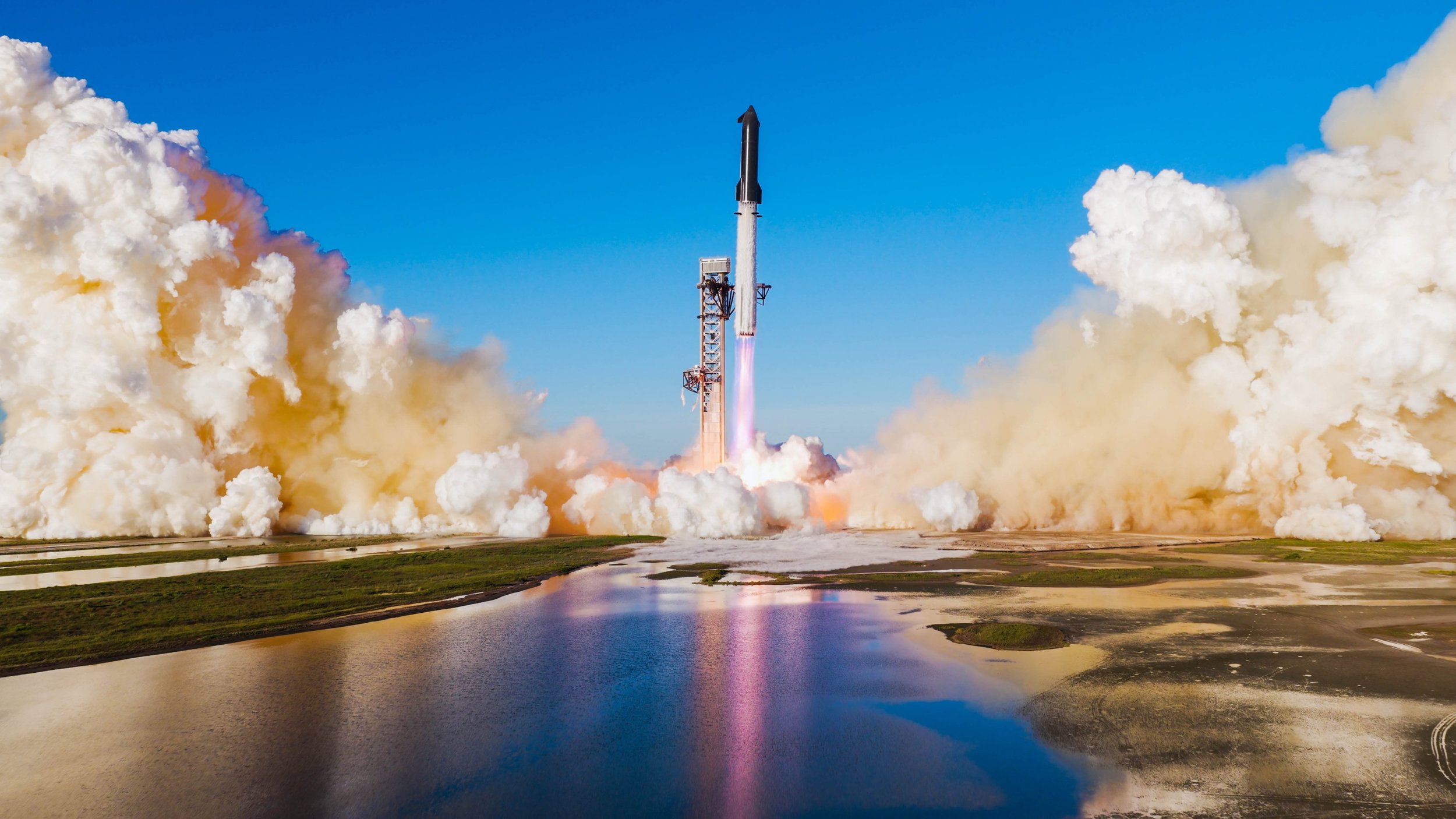
Lift-off! Credit: SpaceX
The first-stage ascent went smoothly, with all 33 Raptor engines working fine. This was quickly followed by hot-staging, and Starship continuing its path up to space with all six of its Raptors looking great. The Super Heavy booster performed its directional flip manoeuvre, relighting 32 of the planned 33 engines. (The single failure was one of the outer ring Raptors, so of little concern because of built-in redundancy.)
SpaceX announced that a catch attempt for Super Heavy was on. But then the booster’s internal guidance, navigational, and control system triggered an automated abort as the booster was getting close to Starbase, successfully diverting it to an offshore landing location. Super Heavy performed a successful landing burn - with all of the inner Raptors reigniting, reducing to five, then three. This greatly slowed the speed of the booster to a mere hover above the surface of the water. At this point, Super Heavy’s flight termination system was triggered. (Ignorantly, the mainstream media turned this planned safety episode into a melodrama of “explosive failure”. But what’s new?)
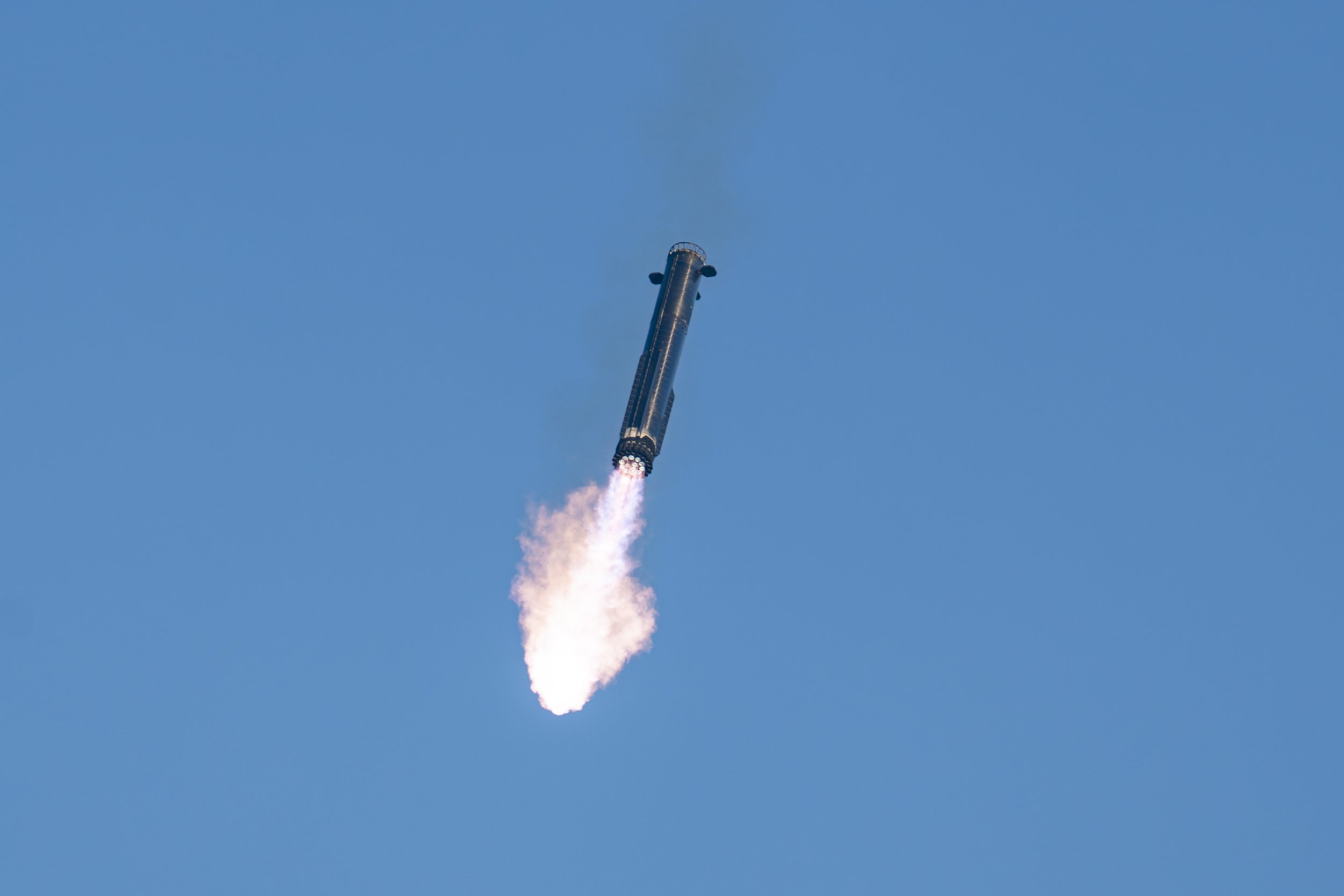
Super Heavy’s landing burn Credit: SpaceX
SpaceX are still looking closely at the data, but it seems that Super Heavy’s boostback burn ended a little bit early because of low fuel mass. Subsequently, the internal guidance, navigational, and control system assessed there might have been insufficient fuel to safely reach the tower, and slow the booster down for a catch.
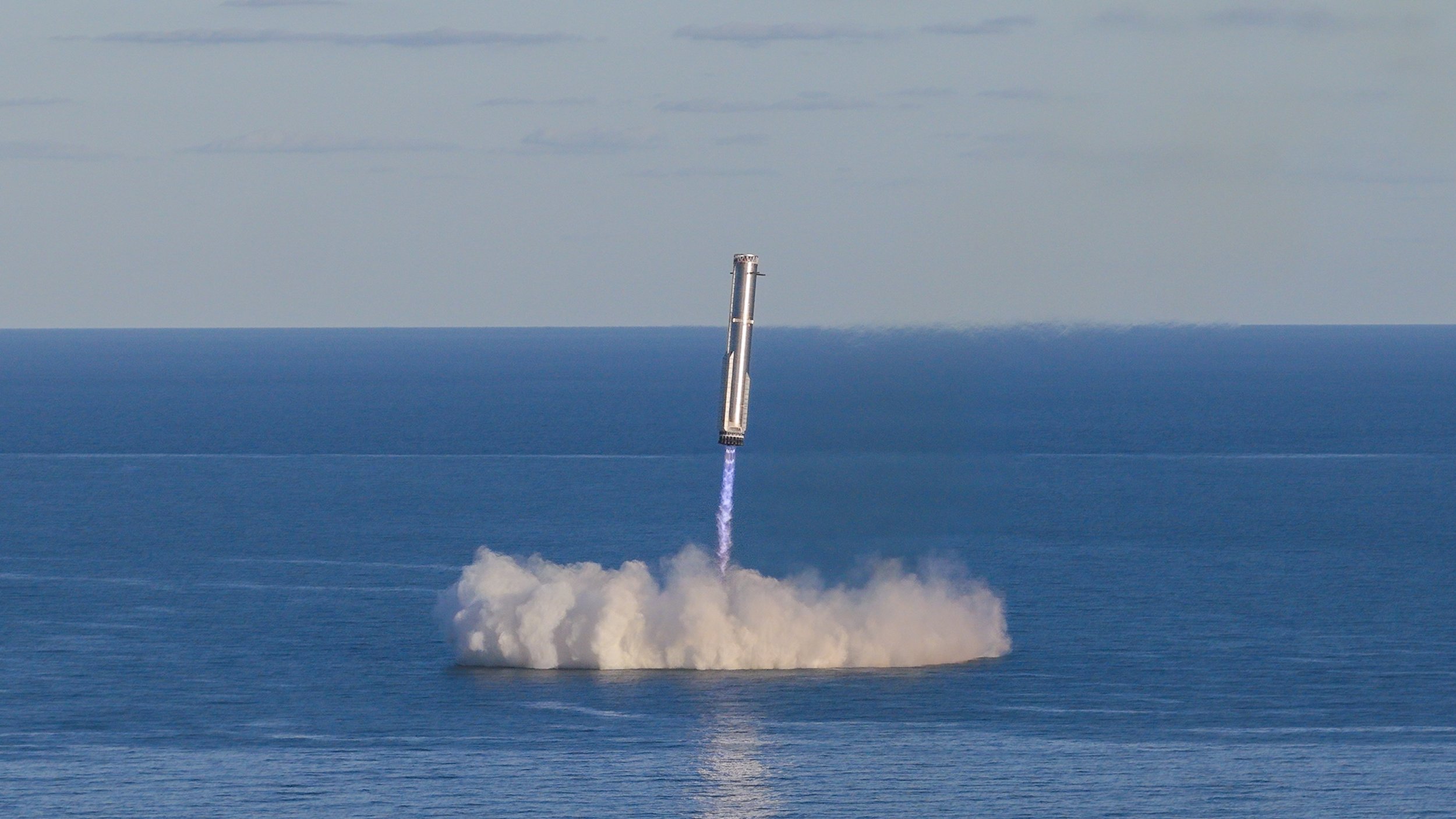
Hovering just off the coastline Credit: SpaceX
Although everyone was rightly disappointed not to see another catch of Super Heavy - following on from the three successful catches of Flights 5, 7, and 8 - safety must always come first. Nobody in their right mind wants to see the tower destroyed or seriously damaged as a result of recklessness - which would set future launches back by months, at least.
Meanwhile, Starship completed a nominal ascent burn and entered a brief coast phase. After numerous system checks, the decision was made to proceed with the single Raptor engine orbital insertion burn.
After making it to orbit, Starship successfully deployed 26 Starlink V3 satellites. Whereas, disappointingly, we weren’t treated to seeing the deployment of these satellites as we did during Flight 14, SpaceX soon released some great footage from the satellites showing Starship in space. Crucially, two of the first four satellites had cameras, plus lighting, to inspect Starship’s heatshield tiles.
Official live coverage continued throughout the flight, with stunning views of Earth below whenever sunlight permitted. Starship completed 14 orbits of our planet, each one in approximately 90 minutes. A deorbit burn, 21.5 hours into the flight, started the process of returning to Earth.
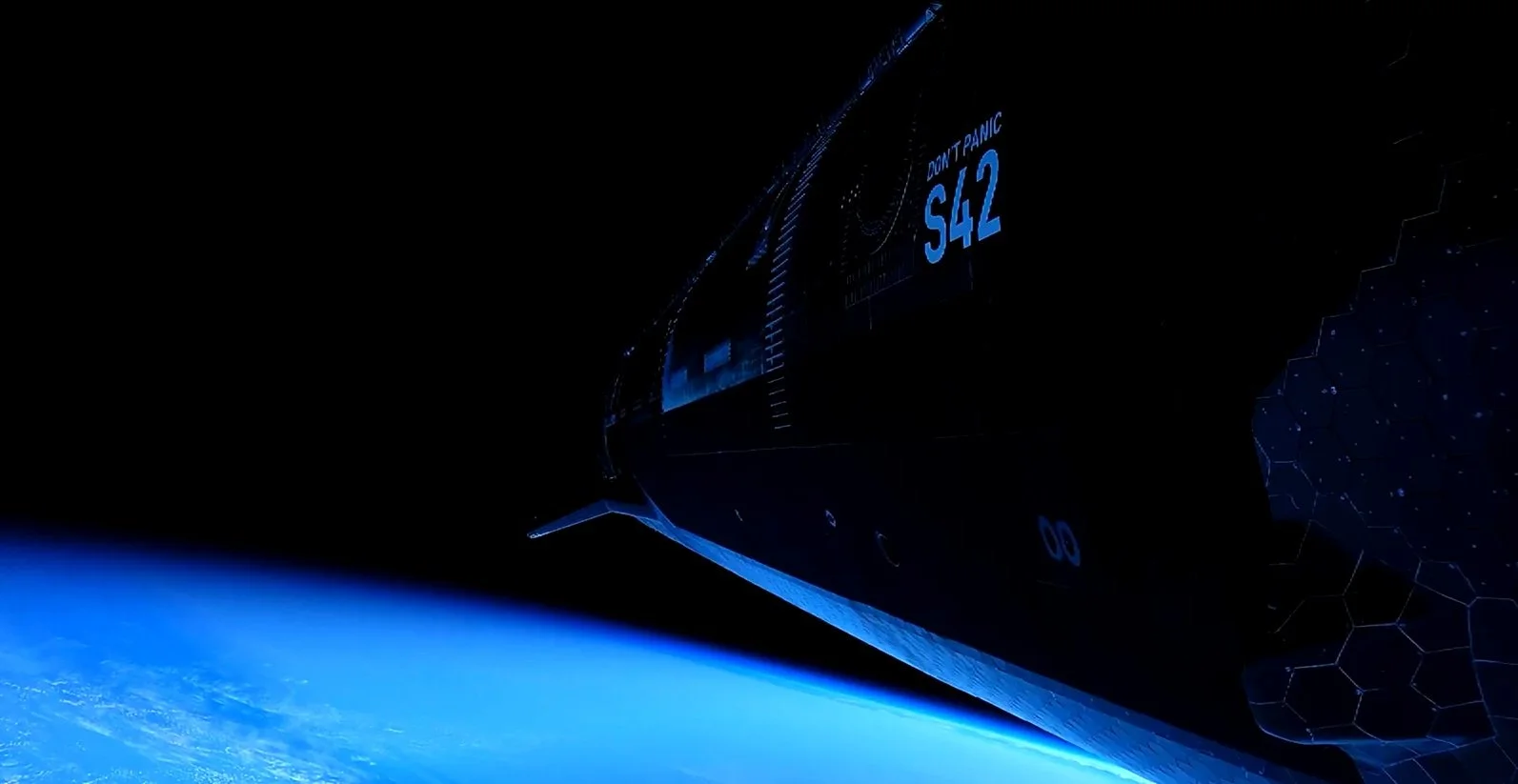
Orbital coast phase Credit: SpaceX
Throughout the long orbital coast phase, SpaceX was closely monitoring the remaining cryogenic fuel as the Ship repeatedly passed between sunlight and darkness. Basically, you don’t want the fuel to get too cold, nor too hot. You have to somehow manage its temperature. And this is all new.
Elon Musk and the SpaceX engineers deliberately chose the harder route of using sub-cooled liquid methane and liquid oxygen for Starship and Super Heavy - a propellant combination known as methalox. First - unlike kerosene (RP-1), which is used in Falcon 9 - methane burns cleanly without leaving heavy soot or carbon deposits inside the engines. This supports the aim of rapid reusability. Second, methane and oxygen can be synthesized directly on Mars using subsurface water ice and atmospheric carbon dioxide - allowing the production of off-world propellant for return flights. So Flight 15’s long duration in space will have no doubt yielded new real-life data that will be invaluable for the future.
Starship made it seamlessly back through the atmosphere, with amazing live views of the colourful plasma thanks to onboard cameras and Starlink, as the excitement ramped up and up.
Heatshield tiles, engines, fuel, flaps, and much more - plus the tower and arms, which had been physically checked overnight - all proved to be in great shape, leading to what we wanted to hear: “Go for catch”.
Starship navigated its way back to Starbase, Texas, returning to where it had lifted off from, 22 hours and 32 minutes earlier. Clear blue skies had graced the launch, but there was now cloud cover. After performing its unique belly flop or swoosh manoeuvre to further slow itself down, Starship finally broke through the clouds. SpaceX employees who build this incredible rocket were cheering loudly.
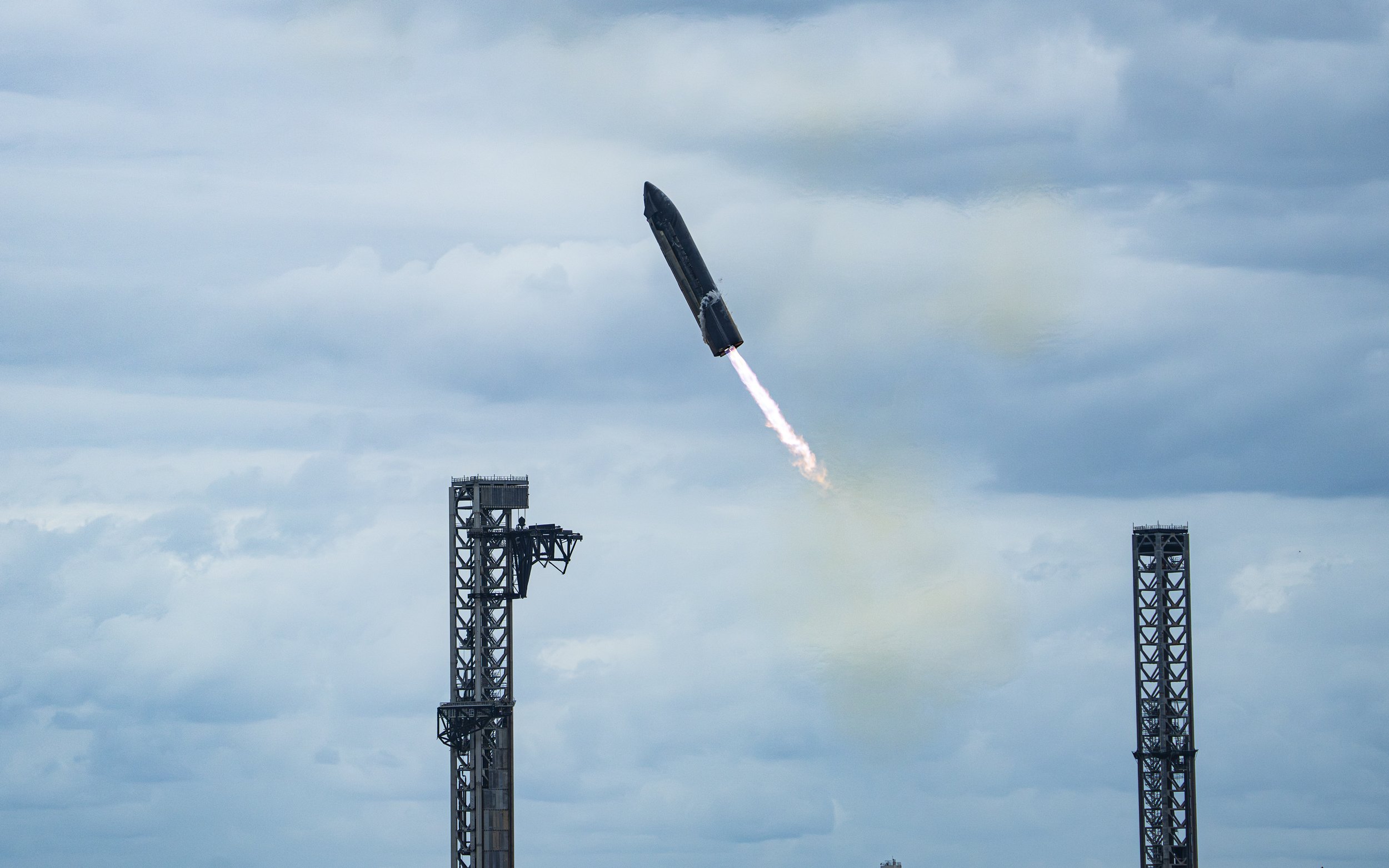
Baby Come Back! Credit: SpaceX
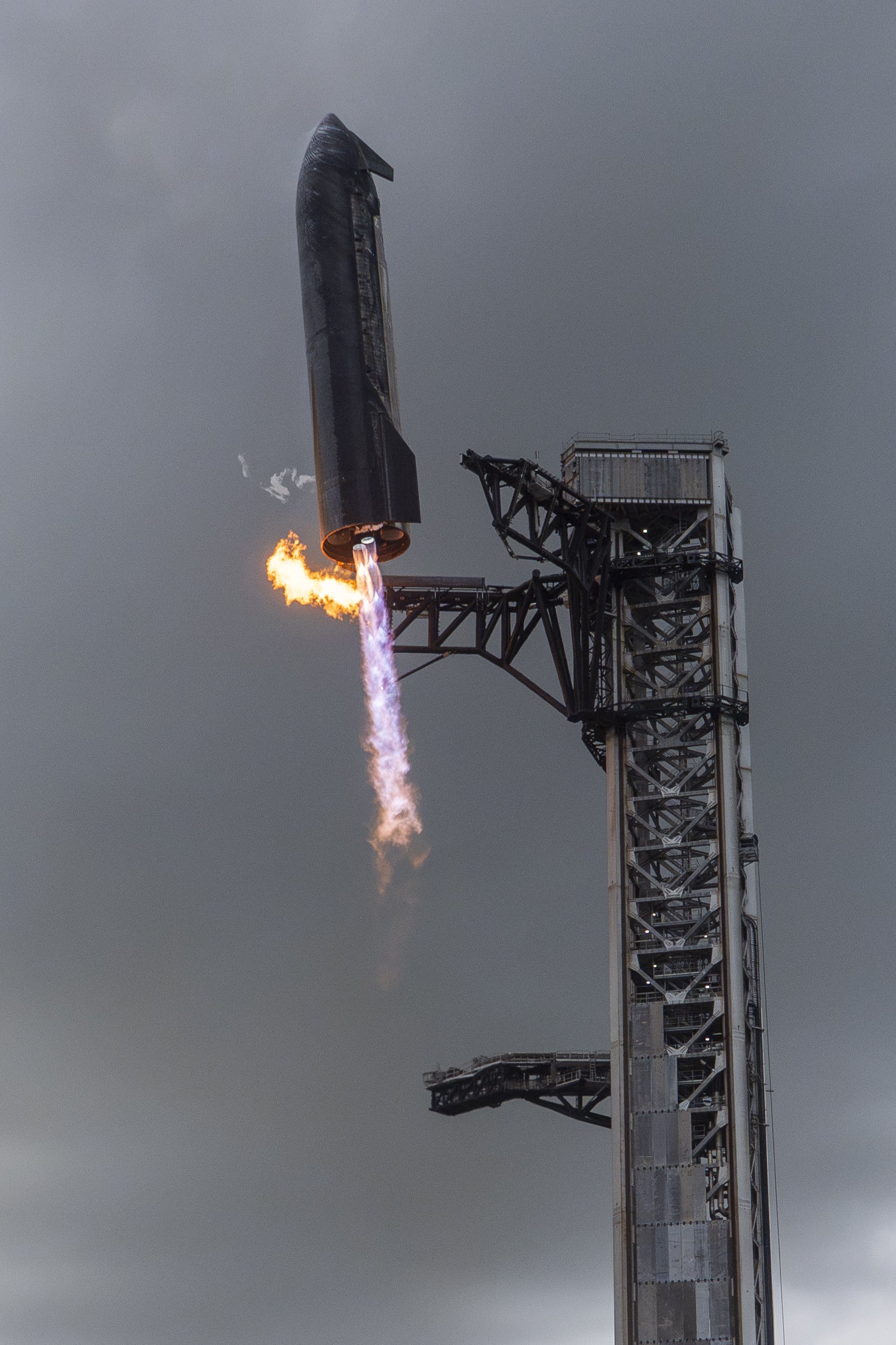
It’s a catch! Credit: SpaceX
As livestream hosts Kate Tice and Jessie Anderson rushed outdoors to join their colleagues, their commentary was appropriately replaced with a hit song from 1977: Baby Come Back by The Players. Three Raptor engines ignited for the spectacular landing flip, further slowing Starship’s descent, as it astonishingly made its way into the catch arms of the tower. It couldn’t have been better. History had just been made.
We will all, through normalisation, soon begin taking the phenomenal performance achievements of Starship for granted. But, for now, this must be seen as one of the greatest technological breakthrough moments in human history. Years of daring to be different, genuinely thinking outside of the box, making concepts real by putting in the necessary dedication and hard work, are proving to be worthwhile. Starship has unparalleled heavy lift capacity, combined with reusability. This will be a game changer in how we approach space travel and exploration.
Written by Iain Scott, 15th November 2026